Are you Intrinsically Motivated?
Intrinsic vs. Extrinsic Musculature
This is where it begins. If you want to really understand your body’s musculoskeletal system in a way that allows you to tailor your life and your workouts in a healthful way, this first concept is essential. There are many models and ways of thinking about the body’s system of muscles, but the one I think is most useful and easily-applicable is to divide them into 2 groups: Intrinsic and Extrinsic.
Extrinsic muscles are the big guys. They’re the ones you’re trying to tone and sculpt so your tush looks good in those leggings. Examples are your gluts (butt muscles), quads (thigh muscles) in your legs or your biceps or deltoids (think Michelle Obama) in your arms. Just like any muscle, extrinsic muscles act to move a joint. When you want to walk up a stair, your brain sends an electrical impulse on the nerve highway to tell your hip flexors to fire, and the result is that your leg lifts and you place your foot on the stair. But what makes an extrinsic muscle extrinsic, is that its bulk lies relatively far away from the joint it controls. Because of that, extrinsic muscles give you the capacity for strength and power, but because of their location if they’re too bossy they can produce pretty messy motion inside the joint. Bad news for the longevity of your joints.
Intrinsic muscles, on the other hand, lie deep within the body and their bulk sits very close to the joint they control. Think the rotator cuff, or in the case of the spine, the lumbar multifidus. My absolute favorite intrinsic muscles are the iliopsoas (pronounced ill-ee-o-so-as) that lie deep within the abdomen like soldiers guarding each side of your spine. Unlike extrinsic muscles, the job of the intrinsics is to produce gorgeous, precise movement at a joint. Instead of strength and power, they give you CONTROL. Think football player (extrinsic) vs. ballet dancer (intrinsic). Why do you think football players have been known to benefit from ballet?
The intrinsics, sadly, are the oft-ignored elements of our musculoskeletal system. You often don’t isolate them in that boot camp workout or that 5-mile jog. You can’t see them so you’re not really motivated to beef them up. The fact that they’re ignored in many sports training and exercise routines is the reason I can have a big old football player shake like leaf when I make him do pilates. Just like many things in life, you don’t miss the intrinsics until they’re gone. I’ll give you an example, one I see a lot:
A patient comes to see me with shoulder pain. They’re irritated to the max, because they do HIIT workouts three times a week and run 3 miles twice a week. They drink green smoothies every morning right after they jump rope for 10 minutes and do a hundred push-up’s. They’re eating paleo, for G-d’s sake. But they remember that their Dad had terrible shoulders, so that must be the problem. I look at the shoulder. Great bulk to the biceps, the deltoid – this looks like a healthy human. But when they try to raise their arm, their shoulder blade is hiking and they can’t go beyond shoulder level. The movement looks terrible. If you want to picture what I’m talking about, think John McCain trying to wave at an audience. Didn’t look normal, right? That’s what motion looks like when your deltoid (extrinsic) is bossy and your rotator cuff (intrinsic) is not in charge.
So what do I do in a case like this? I give those deep, unappreciated intrinsic rotator cuff muscles a little love. I ask the patient to please, for the love of all that is good, STOP doing those lateral raises with 15 pounds and start using some light resistance (or better yet none) in multiple planes of motion with perfect form. I’m pretty specific about these exercises, and I sit right there with my hands on the patient and make them practice until I’m satisfied they can do it correctly without me. When’s the last time your boot camp instructor or your factory farm PT did that? Hm. I’m going to be honest, people, this problem keeps me in business.
Sometimes, what I find, is that I really have to sell intrinsic exercise. It’s small. I had a patient once call the exercises I give for spinal intrinsics “ethereal”. Ha! It’s not a deep squat or a dead lift. It’s lying on your back with your elbow supported, 2lb weight in your hand and rotating your arm forward and back making sure your shoulder blade stays perfectly positioned. You do that for 2 weeks and we increase to 3lbs – woohoo!!! But you know what happens ultimately? You lift your arm overhead without pain, that’s what. Then you’re with me. Then you appreciate your intrinsics. Then – and only then – can we also start to work those extrinsics.
To Stretch, or Not to Stretch? That is the question
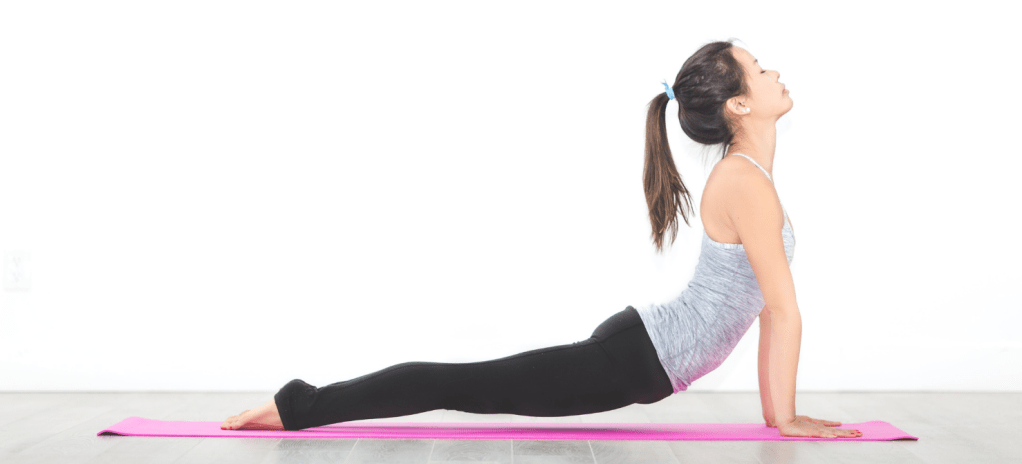
I like to joke to my patients that gravity and yoga keep me in business. That’s pretty true in the case of gravity, but I’m not being totally fair in the case of yoga, which can be an absolutely wonderful thing. I am a HUGE proponent of mindfulness and mind-body connection, especially in this world where we spend so much of our time in intimate relationships with our tech. But I can’t tell you how many times I have a patient tell me they feel stiff and ask if they should do yoga. The question is: when you feel stiffness, is stretching always the answer? In truth, it’s often the exact opposite of what you need.
There is something lying deep beneath your feeling of stiffness, and that thing is called “microinstability”. Let’s examine this concept in the context of your low back. The center of your body, also called your trunk or your core, is meant to stay relatively still as your extremities (arms and legs) move. Picture yourself in the middle of a lake, standing on a platform. Your goal is to jump onto a float 10 feet out in the water.

Now, if the platform you’re standing on is bolted down to the bottom of the lake, you’re going to be able to take a couple steps across it, jump, and hit that float with great accuracy. On the other hand, if the platform you’re jumping off is only secured to the bottom of the lake by 1 chain, allowing it the freedom to float around on the waves, your jump is likely to be wildly inaccurate. Now let’s take that concept back to your body. Again, your core is meant to be the stable foundation upon which your extremities move. It is the platform in the middle of the lake, allowing your extremities to accurately kick a ball or pick up a box. If your core is stable and relatively still, the movement of your extremities is going to be very accurate and the risk of injury is low. If your core is wiggling all over the place, however, the system breaks down.
I once had a patient, a man in his early forties, who said his daughters told him he walked like Taylor Swift. I watched him walk, and frankly, had to agree. As he walked, his pelvis swiveled side to side with each step. There was no stable platform for extremity movement there – the platform was all over the place. In his case, he was coming to me for back pain. He had what a PT would call mechanical instability in his low back, and what might make more sense as a “wobble-wobble”. That sassy Taylor Swift walk was constantly wobbling the junction between his L4 vertebra and his L5 vertebra, causing irritation of the soft tissue structures and spasm of the overlying muscles, which were trying to help. So his perception of stiffness in this area was actually the result of his muscles going into spasm to try to guard the excess of movement at the joint. This patient could easily have decided he wanted to stretch his low back. He could have done spinal twists and downward dogs and forward folds. But he would have ended up in my office anyway if he’d made that very well-intentioned move. Because what he ACTUALLY needed was something called stabilization exercise.
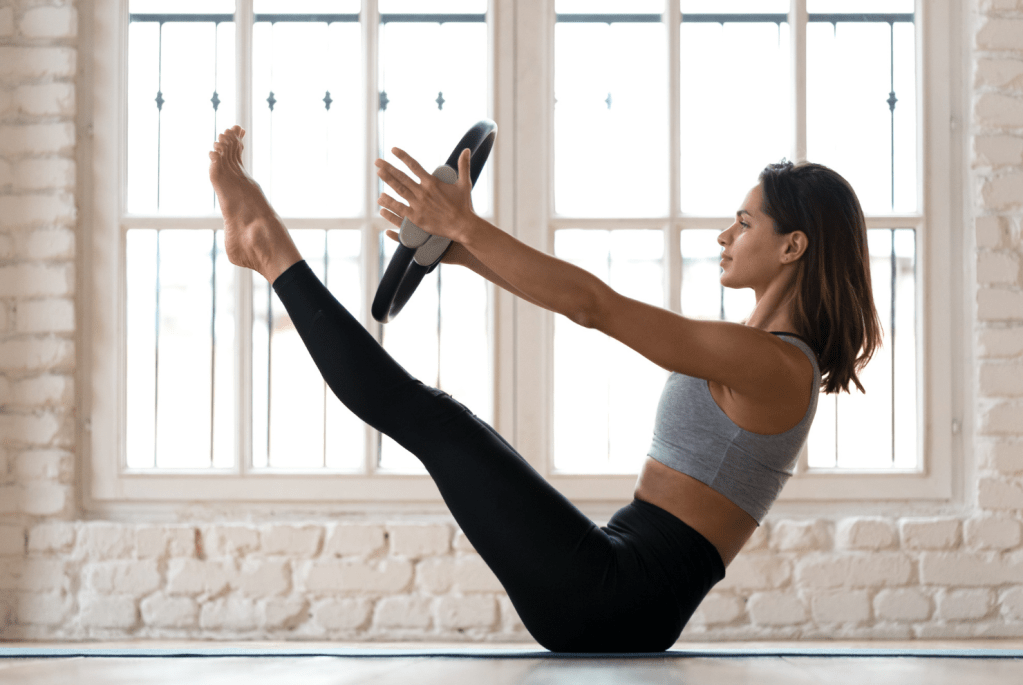
Stabilization exercise is, in a nutshell, exercise where your center stays still and your extremities move. It’s not holding a plank for 2 minutes straight. It looks very much like pilates, because that’s actually exactly what pilates is – stabilization exercise. Sometimes it’s on a mat and sometimes it’s on a reformer, but what you’ll notice if you’ve ever taken a pilates class is that the exercises are a million variations on a theme in which your center stays still and your extremities move. This requires good coordination and counter-balancing between the front side and the back side of your body, just as should be present with walking or running or lifting or whatever other activity you might choose to do.
A lot of us, for one reason or another, have a very asymmetric ability to stabilize. Try this: lie on your back, legs outstretched. Place your fingertips on the bony prominences at the front of your pelvis to monitor how you’re doing. Slowly lift one leg up, keeping it straight, then lower. Did you feel any movement at your pelvis? Chances are you felt it tip toward the side you were lifting. Now do the other side. Was there more or less movement at the pelvis? This gives you some indication on how symmetrically you can stabilize. Now try this movement again. Start by gently flattening the low back into the floor. Press the stationary side down, firmly, then float your moving leg up. If you do this properly, you should feel less movement in your pelvis. And that’s your first stabilization exercise! Just because a movement is simple, don’t make the mistake of thinking it’s easy. Stabilization exercise starts with very simple exercises, moving in one plane of motion. It distills movement down to it’s basics so we can establish some underlying control before we make the movements more complex. And it works like a CHARM.
After you’ve been doing your stabilization exercises for a bit – and it usually doesn’t take long – you’ll notice your feelings of stiffness decreasing. And you haven’t even done one stretch!
Follow My Blog
Get new content delivered directly to your inbox.
 The Movement Mama